
The Tool You Arrive With
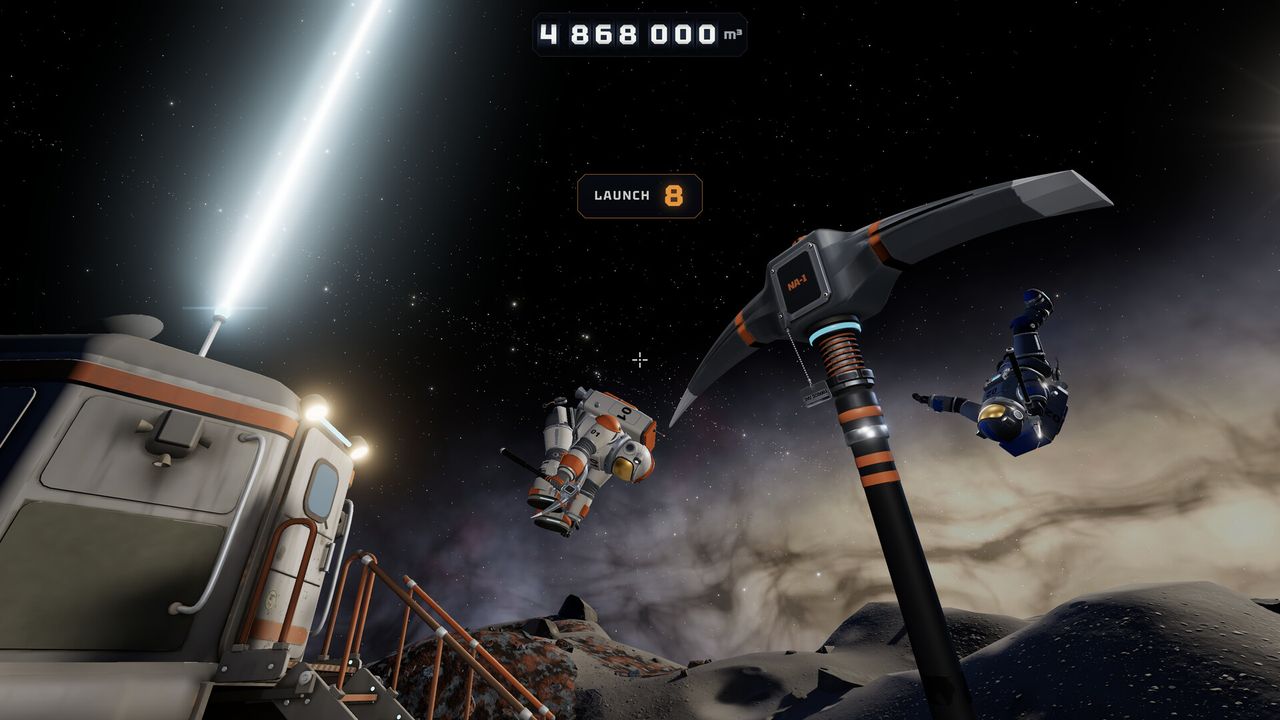
The pickaxe is the only tool you own at the start, and the fiction explains why: you brought it yourself. It is weak, slow, and enough to earn the first few hundred credits.
It has three upgrade lanes shown in the workshop: hit power, tempo, and sweep. Power governs how hard a swing hits, tempo governs how fast you swing, and sweep governs how wide an area you clear.
Each lane solves a different problem, which is why a balanced spread feels better early than a deep investment in one.
What Each Stat Actually Does
Hit power is the answer to hard rock. If swings are bouncing or taking multiple hits per block, power is the bottleneck.
Tempo is the answer to slow clearing. If the rock breaks easily but you feel like you are waiting, tempo is the bottleneck.
Sweep is the answer to narrow tunnels. It clears more per swing, which matters when you are carving a route rather than chasing a single seam.
How Far to Upgrade It
Upgrade the pickaxe until a shift feels limited by air or cargo rather than by digging. That is the signal that the tool is no longer your bottleneck.
Past that point, money is better spent on the sledgehammer ($500 in the footage we reviewed) or saved toward the drill ($2,000). Continuing to pour credits into a starting tool delays the step-up that actually changes your day rate.
A useful checkpoint: if you can fill your hold before the air bar is half gone, stop upgrading the pickaxe.
Pickaxe vs Sledgehammer vs Drill
The pickaxe is free and upgradable. The sledgehammer is the first paid step and roughly a four-times price jump over a single pickaxe upgrade tier in the footage. The drill is the mid-game commitment.
The right sequence is pickaxe upgrades to comfort, then sledgehammer, then drill once air and cargo can support longer shifts.
Buying the drill early is the classic mistake: it digs faster, which means you hit your air limit sooner, which means more failed returns.
When to Stop Using It
Retire the pickaxe when the sledgehammer or drill is affordable without delaying an air upgrade. There is no achievement for loyalty.
Keep it in mind for tight spaces, though: a wide tool is not always better in a narrow shaft, and the pickaxe's small footprint can be an advantage when you are carving precision routes.